Soft Washing vs. Pressure Washing: Which One Your Spokane Home Actually Needs
Two different methods, two different results. Here's what each does, which surfaces need which method, and why picking the wrong one can cost you far more than the cleaning.
The Short Answer
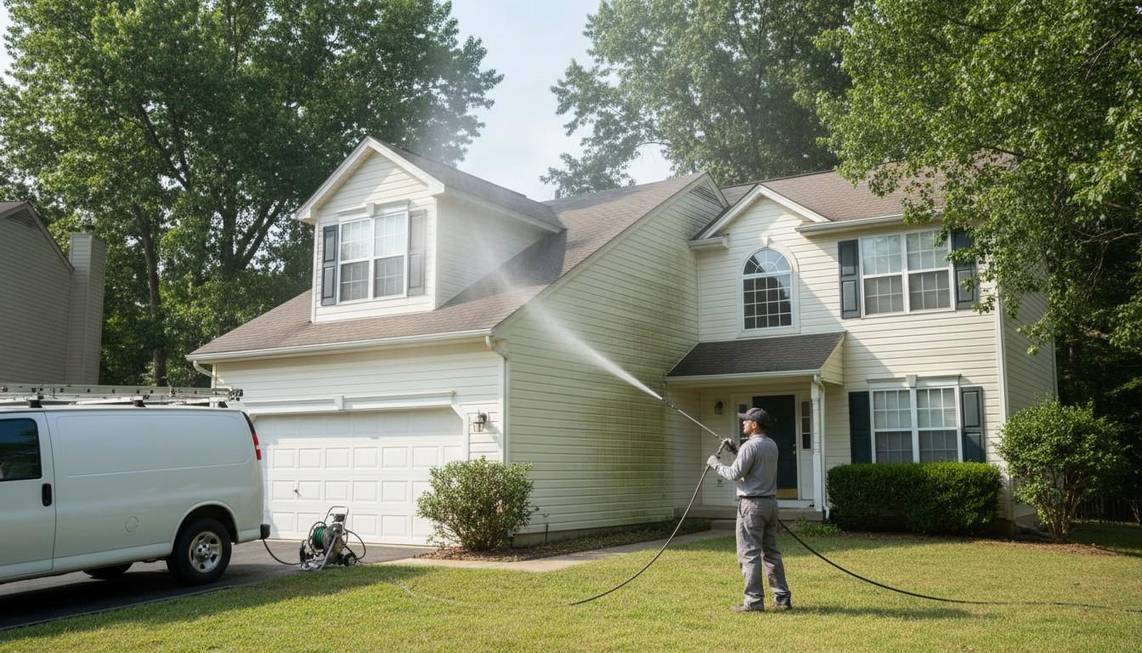
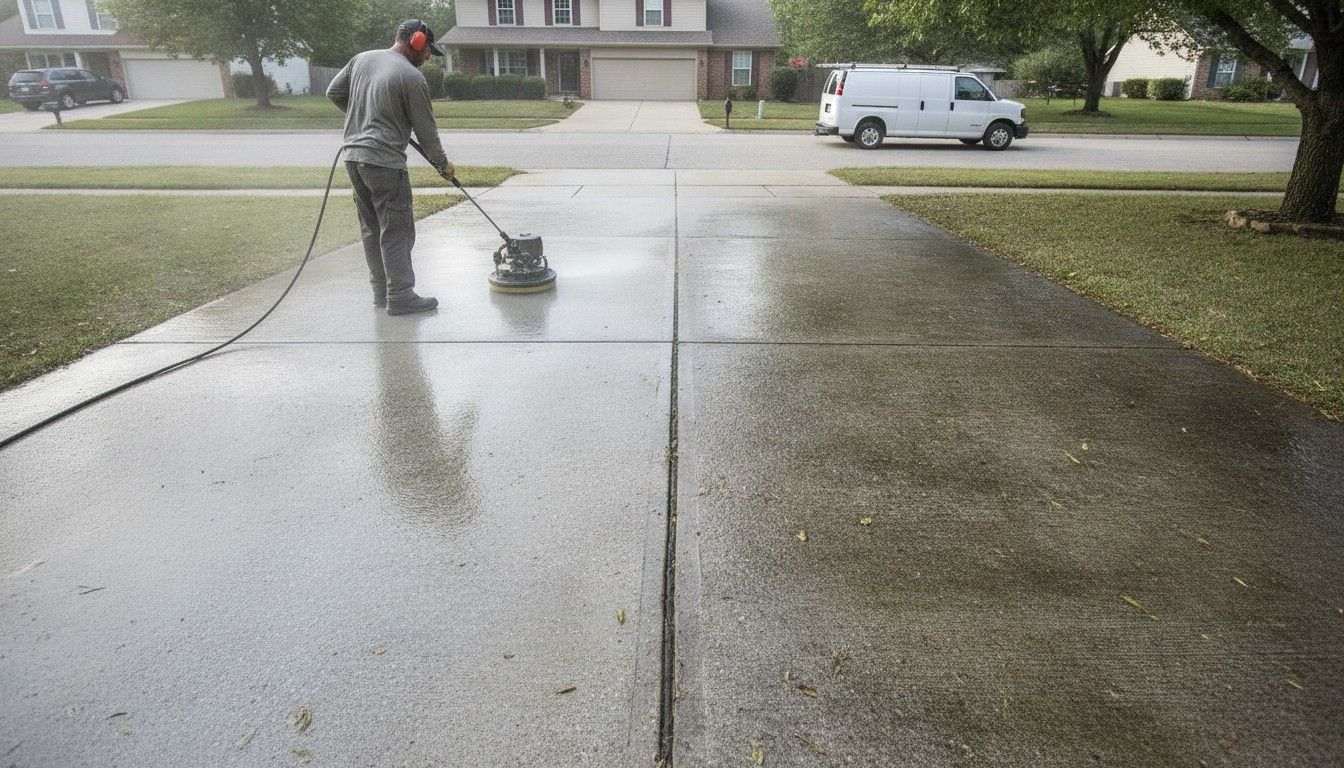
Roof, siding, stucco, painted wood. If the surface is delicate or painted, soft washing is the only safe method. Concrete, brick, pavers, most masonry. If it is hard and durable, pressure washing is faster and more effective. The two methods aren't interchangeable, and picking the wrong one is how roofs lose their granules and siding gets cracked. The crew carries the equipment for both, so your whole property gets the right method on every surface. Call (509) 213-1891 and describe what needs cleaning. We'll tell you plainly which method it needs.
What Each Method Actually Is
Soft washing: low pressure, a cleaning agent does the work
Soft washing runs at low pressure, under 1,000 PSI, which is closer to a garden hose than to anything you'd call a pressure washer. The muscle is in the cleaning agent. It kills moss, algae, and mildew at the root instead of shaving off the visible layer, and then a gentle rinse carries the dead growth away. No force means it's safe on the surfaces that can't take a hard water blast: asphalt shingle roofs, vinyl and painted siding, stucco, painted wood trim. It's also why the clean lasts longer. Growth that's dead doesn't grow back in a season. Growth that got knocked loose does.
Pressure washing: high-pressure water, no chemistry required
Pressure washing (power washing, same thing) is the opposite bet: pure force, water at 2,000 to 4,000+ PSI depending on the surface and job. That force is what physically lifts ground-in dirt, tire marks, oil residue, and the road film a Spokane driveway collects between November and March. Driveways, sidewalks, patios, brick, most masonry are built for it, and nothing works faster there. But the pressure that strips winter off concrete will strip granules off a shingle or paint off a wall with exactly the same enthusiasm. The tool doesn't know the difference. The person holding it has to.
What surfaces call for which method?
This is the test that matters, and it has nothing to do with how dirty a surface looks. It's about what the surface is made of and whether it can take direct pressure.
Soft wash surfaces
- Asphalt shingle, tile, and metal roofs
- Vinyl, wood, and painted siding
- Stucco and painted trim
- Any surface with existing paint you want to keep
- Older or weathered surfaces that could crack or chip under force
Pressure wash surfaces
- Concrete driveways, walkways, and patios
- Brick and most masonry
- Pavers and stone hardscaping
- Garage floors and commercial lots
- Decks and fences (at a gentler, wood-matched pressure)
Decks and fences sit in the middle. They can handle more pressure than a roof but less than bare concrete, so they get a gentler pressure matched to their material rather than either extreme.
Why Using the Wrong Method Actually Causes Damage
This is the part people usually learn from the repair bill. Pressure washing a roof strips the protective granules off asphalt shingles, the ones that shield the roof from UV, and forces water up under the tabs where it has nowhere to dry out. On siding, that same pressure can crack vinyl panels, strip paint down to bare wood, or drive water in behind the panels, setting up mold and rot you won't spot from the ground. Spokane makes the temptation worse. Our wet, shaded, pine-heavy lots grow moss and algae faster than drier climates, so there's more ugly green to look at, and a homeowner deciding to blast it off a roof with rented pressure is exactly how the damage starts.
The reverse mistake is cheaper but still a wasted Saturday: soft washing a concrete driveway is perfectly safe, it just won't fully lift ground-in oil, tire marks, or mineral deposits, because there's no force behind the rinse to dislodge what's embedded in the slab. Matching the method to the surface isn't a technicality. It's the whole job.
How do cost and time compare?
Soft washing generally costs more per square foot than pressure washing on a comparable surface. The cleaning agent and the dwell time it needs before the rinse are what drive that. Pressure washing a driveway or patio moves faster since it relies on force alone: no cleaning agent, no waiting for chemistry to work. Both prices shift with square footage, how much buildup is on the surface, and how easy the area is to access.
| Surface | Method | Typical market range |
|---|---|---|
| House exterior | Soft wash | $0.20 to $0.50 / sq ft |
| Driveway / concrete | Full pressure | $0.25 to $0.35 / sq ft |
| Deck / wood | Gentle pressure | $0.30 to $0.55 / sq ft |
| Fence | Surface-matched | $0.30 to $0.50 / sq ft |
| Roof & gutter | Soft wash | $150 to $1,000 / job |
These are ballpark estimates. Square footage, how much buildup is on the surface, and access all shift the actual total. See the full pressure washing cost in Spokane breakdown, or call (509) 213-1891 with your address for a real number before scheduling.
What three questions settle it?
1. Is the surface painted or does it have a protective coating? Painted siding, trim, and shingle roofs all fall into this category. If yes, it's a soft wash surface. Full stop.
2. Is it bare concrete, brick, or stone? These surfaces are built to take direct pressure, and pressure is what actually clears embedded stains out of them. This is pressure-washing territory.
3. Is it wood or a fence? These sit in the middle. They can usually take more than a soft wash but less than the full pressure used on concrete, so they get a gentler, surface-matched pressure instead of either extreme.
Answer those three for each surface on your property and the choice becomes obvious. If it isn't, call (509) 213-1891 and describe what needs cleaning. The same crew handles both methods, and you get a straight answer, not a guess.
What to Expect
- Call (509) 213-1891. Describe what needs cleaning. We answer anytime.
- We line up a free estimate with the crew, and the right method for each surface gets built into the price before anything is scheduled.
- The crew handles both. Soft wash on roof and siding, full pressure on concrete, all with the same truck and appointment.
Two things worth reading before that visit: how to prepare for the appointment is the ten minute list for the night before, and how to remove moss from a Spokane roof explains why the soft wash side of this comparison is not optional on shingles. If you are still weighing a rented machine against hiring it out, the DIY versus professional guide splits that honestly.
Service covers Spokane, Spokane Valley, Mead, Liberty Lake, Cheney, Airway Heights, Deer Park, and Suncrest.
Soft Washing vs. Pressure Washing: FAQ
What is the actual difference between soft washing and pressure washing?
Can pressure washing damage my roof or siding?
Which method should I use on my driveway or concrete?
Is soft washing enough to remove tough stains, or do I need pressure washing?
How much does soft washing cost compared to pressure washing in Spokane?
Can the same crew handle both soft washing and pressure washing?
Is soft washing safe for my landscaping and pets?
Why does Spokane's climate make this choice matter more here?
How do I know which method my house actually needs?
Can soft washing be used on a concrete driveway?
Get the Right Method for Every Surface
One call lines up a free estimate that already accounts for soft washing and pressure washing wherever your property needs each one.
Call Now: (509) 213-1891